Finding a dependable supplier begins with more than comparing prices on a polished website. Custom t-shirt manufacturing requires careful checks, practical questions, and patience.
A reliable manufacturer should explain fabric weight, fiber content, sizing, printing methods, and production limits clearly. Ask for physical samples, not only digital photos. Inspect the neckline, seams, stitching density, print edges, and wash performance. Small details matter. A sample may look excellent but reveal shrinkage after washing. That single test can prevent hundreds of disappointing units.
Look for documented quality procedures, transparent sourcing information, and relevant production certifications. Confirm minimum order quantities, sampling fees, lead times, packaging standards, and payment terms before placing an order. Clear written communication is essential. Delayed answers often become delayed shipments. However, fast replies do not always prove technical competence. This is where many buyers misjudge a factory.
Request recent product examples and verifiable customer references when possible. A manufacturer experienced with retail orders may not suit a small startup. Likewise, a low minimum order may hide limited equipment or inconsistent quality. Compare several suppliers using the same checklist. Then consider how each responds to difficult questions. Their honesty matters more than impressive promises.
No supplier is perfect. Even experienced teams can make mistakes. The better partner acknowledges risks, documents corrections, and accepts reasonable inspections. This guide explains how to evaluate manufacturers with evidence, not assumptions, so your final choice supports consistent quality, realistic costs, and dependable delivery.
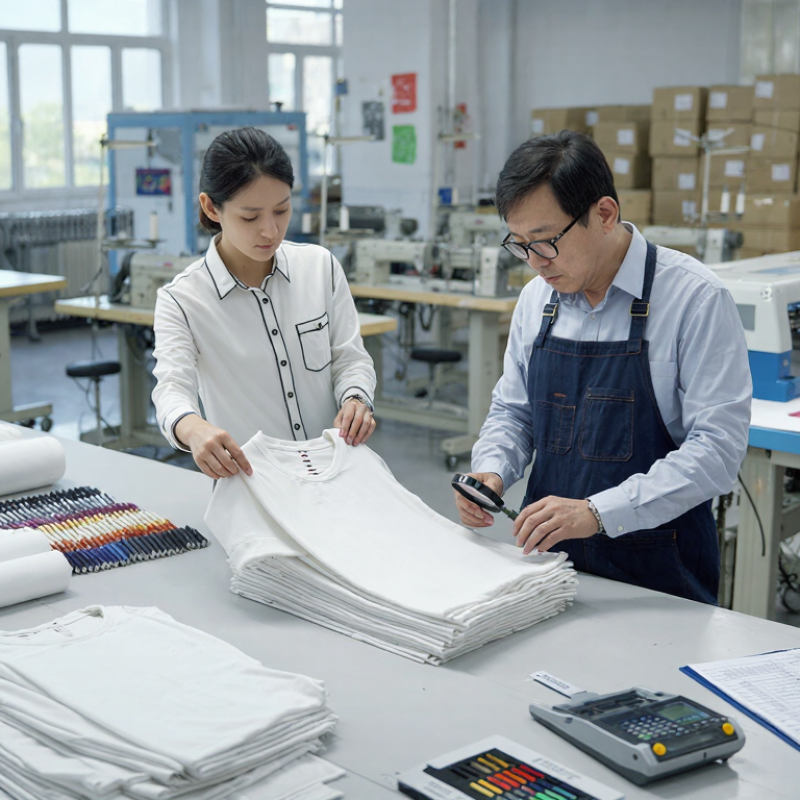
Define your custom T-shirt requirements before contacting manufacturers. Start with the product’s purpose, target wearer, selling price, and expected order volume. Specify fabric composition, weight, stretch, color, fit, size range, and washing performance. A clear technical pack reduces guesswork.
Fabric weight needs precision. For example, request 180 GSM cotton rather than “medium-weight cotton.” Define printing locations, artwork dimensions, ink type, embroidery limits, labels, packaging, and acceptable measurement tolerance. Include sample approval stages and production deadlines.
The 2024 Materials Market Report from Textile Exchange reported that global fiber production reached approximately 124 million tonnes in 2023. Material choices therefore affect both product performance and environmental claims. Ask manufacturers for fiber documentation and testing records. Do not rely on vague sustainability language.
Production controls matter too. State your minimum order quantity, replenishment plan, inspection standard, and shipping requirements. Request pre-production samples using the final fabric and decoration method. Check shrinkage after washing, colorfastness, seam strength, print cracking, and size consistency. Small defects become expensive at scale.
A 2023 industry report from the International Trade Centre highlighted growing pressure for greater textile supply-chain transparency. Request factory details, subcontracting disclosure, and recent compliance evidence. Protect worker welfare and product safety through documented procedures.
Leave room for revision. My early specifications were too optimistic about color matching and delivery speed. A perfect brief is unlikely. Build contingency time and approve changes in writing. Suppliers should explain limitations, not simply promise everything. That response often reveals their real manufacturing capability.
Finding reliable custom T-shirt manufacturers begins with focused research, not a rushed online search. Define your fabric, fit, printing method, quantity, and target delivery date. Then search industry directories, trade exhibitions, and supplier websites with clear production details. A professional website helps, but it proves little alone. Review factory photos, equipment lists, quality procedures, and recent customer references. Real evidence matters.
Create a shortlist of five to eight manufacturers. Ask each supplier about minimum order quantities, sample fees, fabric sources, production capacity, and inspection methods. Request a physical sample in your chosen fabric and size range. Check the stitching, collar recovery, print edges, color consistency, and measurements after washing. Small defects can reveal weak process control. They often do.
Communication is another practical test. Send the same specification sheet to every candidate and compare response speed, clarity, and willingness to discuss problems. Reliable teams usually explain limitations instead of promising everything. Verify certifications independently when possible, and request a recent factory audit or production video. Speak with references about late shipments, payment terms, and how complaints were handled. I would not select a manufacturer only because the quote is low; hidden rework costs can damage a launch. Still, expensive pricing does not guarantee quality. Recheck your assumptions before signing.
Manufacturer research and shortlist scorecard based on verifiable production, quality, compliance, and commercial criteria.
| Research Dimension | Reliable Benchmark | Evidence to Request | Shortlist Interpretation | Weight |
|---|---|---|---|---|
| Business Verification | Legally registered business with a traceable factory address and consistent contact details. | Business registration, factory address, production photographs, operating history, and an authorized quotation. | Advance only when company information, factory location, and payment beneficiary are consistent. | 10% |
| Product Specialization | Documented experience with the required T-shirt construction, fabric, decoration, and packaging methods. | Recent samples, technical specification sheets, sewing details, print or embroidery samples, and production capabilities. | Prioritize manufacturers that can reproduce the requested product without relying entirely on subcontractors. | 15% |
| Minimum Order Quantity | MOQ must fit the launch volume, size-color mix, and available inventory budget. | MOQ by style, color, size, fabric, and decoration method; separate setup or sampling fees. | Reject suppliers whose MOQ creates excessive stock risk or cannot be confirmed in writing. | 10% |
| Fabric and Specifications | Fiber content, fabric weight, width, shrinkage, color standard, and finishing requirements are clearly defined. | Fabric swatches, fiber-content documentation, GSM test results, shrinkage data, color references, and approved tech pack. | Shortlist suppliers that accept measurable specifications instead of descriptions such as “premium quality” only. | 15% |
| Sampling Process | A physical pre-production sample is approved before bulk manufacturing begins. | Sample timeline, sample invoice, revision policy, measurement sheet, and signed approval procedure. | Select manufacturers that document revisions and use the approved sample as a bulk-production reference. | 10% |
| Quality Control | Written inspection criteria covering measurements, fabric defects, stitching, print placement, color, labeling, and packing. | Quality-control checklist, inspection photos, defect classification, corrective-action process, and optional pre-shipment inspection arrangements. | Give preference to suppliers with documented controls rather than informal visual checks only. | 15% |
| Compliance and Traceability | The manufacturer can provide applicable social, environmental, chemical, and product-safety documentation. | Current audit or certification documents, scope and expiry dates, restricted-substance testing, and supply-chain information. | Verify documents with the issuing organization where possible; do not accept expired or unrelated certificates. | 10% |
| Production Capacity and Lead Time | Capacity is sufficient for the order, with a documented production schedule and realistic delivery window. | Monthly capacity, current production load, sample lead time, bulk lead time, holiday schedule, and delay contingency plan. | Choose suppliers that provide dates linked to approval milestones, fabric booking, production, and inspection. | 10% |
| Pricing and Payment Terms | Quotation is itemized, valid for a defined period, and separates product, decoration, packaging, tooling, inspection, and freight costs. | Formal quotation, payment schedule, currency, bank-account details, tax treatment, packaging costs, and price-adjustment conditions. | Compare total landed cost rather than unit price alone, and avoid unexplained last-minute charges. | 10% |
| Communication and After-Sales Support | Clear written communication, timely responses, an assigned account contact, and a documented claims process. | Response records, order-management workflow, escalation contact, replacement or credit policy, and references that can be contacted confidentially. | Remove suppliers that avoid technical questions, change terms frequently, or cannot explain how defects are resolved. | 5% |
Shortlist Decision Rules
Recommended research record: supplier profile, verified evidence, score by dimension, unresolved risks, sample result, final decision, and review date.
Finding a reliable custom T-shirt manufacturer starts with evidence, not polished promises. Request fabric samples, print swatches, and a stitched pre-production sample. Check shrinkage after washing, seam strength, collar recovery, and color consistency. I once approved a soft sample that twisted after laundering. That mistake exposed a weak quality-control process. Ask how measurements are recorded and how defects are handled. A dependable supplier should explain inspection points, tolerance ranges, and replacement procedures clearly.
Production Capacity Production capacity needs practical proof. Ask for monthly output, current order load, staffing, and equipment details. Compare these figures with your expected quantity and delivery window. A factory may produce 20,000 shirts monthly, but that does not guarantee space for your order. Request a realistic timeline covering sampling, material sourcing, production, and final inspection. Small test orders reveal more than confident sales calls. Track response speed and whether promised dates change without explanation.
Customization includes more than adding artwork. Confirm fabric weight, dye options, sizing, labels, packaging, embroidery, screen printing, and wash effects. Ask which options require minimum quantities or separate setup fees. Color matching should use physical references, not only digital files. Keep approved samples and written specifications together. My own oversight was forgetting sleeve-label placement, which caused rework and extra packaging time. Reliable communication is part of product quality. Suppliers can still make mistakes, so leave inspection time before shipment.
Reliable custom T-shirt sourcing begins with comparable numbers, not attractive promises. Grand View Research valued the global custom T-shirt printing market at about $4.3 billion in 2022, with projected annual growth above 11% through 2030. That growth attracts inexperienced suppliers. Ask for a line-by-line quotation covering fabric weight, printing method, packaging, sampling, and delivery.
Price alone can mislead. A lower unit cost may hide setup fees, expensive shipping, or weaker fabric. Compare three quotes using the same specifications, such as 180 GSM cotton, identical artwork, and the same order quantity. Minimum orders also matter. Some factories accept 50 pieces, while others require 500 or more. A smaller MOQ reduces inventory risk, but usually increases the unit price.
Turnaround needs written milestones. Request sample production time, bulk production time, inspection time, and transit time separately. The U.S. Fashion Industry Association’s 2023 industry benchmarking found that many fashion companies continued to face supply-chain delays and cost pressure. Build a buffer of at least seven days. It helps. A practical test order should include several sizes and one wash test. I once assumed a fast sample meant fast bulk production; that assumption was weak. Suppliers should provide dated updates, measurable tolerances, and a replacement policy for defective pieces. Perfect forecasts are rare. Clear evidence is better.
A reliable custom T-shirt manufacturer should prove quality before receiving a large order. Request physical samples made with the same fabric, printing method, stitching, and size specifications. Check the collar recovery, seam strength, fabric weight, color consistency, and shrinkage after washing. A sample that looks excellent under bright studio lights may feel different after one wash. Test it honestly.
Certificates require careful verification, not just a scanned image. Check the certificate number, expiration date, issuing organization, and covered production site. Confirm that the certification applies to relevant areas, such as material safety, quality management, or environmental controls. Contact the issuing body when details seem unclear. Paperwork can be outdated. That mistake is easy to make.
Supplier reliability also appears in daily communication. Ask for a production timeline, inspection process, replacement policy, and clear payment terms. Request recent factory photographs, but treat photographs as supporting evidence, not proof. A video call can reveal storage conditions, cutting tables, labeling systems, and order records. During one review, I noticed that fast replies did not always mean strong production control. The supplier answered quickly, yet could not explain how rejected garments were recorded. That gap deserved attention. Keep written records of every specification, approval, and promised delivery date. Small details often protect the final order.
Define the fabric, fit, printing method, quantity, and delivery date. Search directories, exhibitions, and supplier websites. Look for equipment lists, factory photos, quality procedures, and references. A polished website proves little.
Keep five to eight manufacturers for comparison. Send each supplier the same specification sheet. Ask about minimum orders, sample fees, capacity, fabric sources, and inspections. Their answers reveal useful differences.
Inspect stitching, collar recovery, print edges, measurements, and color consistency. Wash the sample before approving bulk production. Check shrinkage and seam strength afterward. Small defects matter.
Request line-by-line pricing for fabric, printing, packaging, sampling, and delivery. Use identical specifications for every quote. For example, compare the same fabric weight, artwork, and quantity. Cheap pricing may hide setup or shipping costs.
A smaller minimum order reduces inventory risk. It may increase the unit price. Some suppliers accept 50 pieces, while others require 500 or more. Choose according to expected demand, not optimism alone.
Request separate dates for sampling, bulk production, inspection, and transit. Add a buffer of at least seven days. Ask for dated progress updates and measurable tolerances. Fast samples do not guarantee fast bulk production.
Check the certificate number, expiration date, issuing organization, and production site. Confirm that the certificate covers the relevant material or quality area. Contact the issuing organization when details seem unclear. Scanned paperwork may be outdated.
Reliable teams explain limitations instead of promising everything. Ask about rejected garments, inspections, replacements, payments, and complaints. A video call may show cutting tables, storage areas, and labeling systems. Fast replies are not enough. I once trusted them too quickly. That judgment was weak.
Finding a reliable custom T-shirt manufacturer begins with clearly defining your requirements, including fabric type, garment styles, sizes, colors, printing or embroidery methods, estimated order volume, and delivery expectations. Once your needs are established, research and shortlist manufacturers that appear capable of meeting them. Compare their production capacity, customization options, quality-control procedures, communication practices, and experience with similar projects.
During the selection process, carefully review pricing, minimum order quantities, payment terms, and turnaround times rather than focusing only on the lowest quote. Request samples to assess fabric quality, fit, color accuracy, stitching, and print durability. You should also verify relevant certifications, manufacturing documentation, and customer feedback where available. Clear communication and consistent supplier performance are essential in custom t-shirt manufacturing, helping you reduce production risks, avoid unexpected delays, and build a dependable long-term partnership.