Choosing China’s top custom hoodie manufacturing suppliers requires more than comparing factory prices. A dependable partner should show real production experience, clear communication, and consistent quality. Buyers need to inspect fabric weight, cotton content, fleece softness, shrinkage, colorfastness, and stitching before placing large orders. A 400 GSM hoodie may feel premium, but poor ribbing can still ruin the garment.
Orsola de Castro, co-founder of Fashion Revolution, has said, “Fashion is a beautiful industry, but it is also one of the most polluting industries in the world.” Her warning matters in Custom hoodie manufacturing. Responsible suppliers should explain their material sources, wastewater controls, worker protections, and packaging choices. Certifications can help, but certificates alone do not prove daily factory performance. Request current documents, production photos, and independent verification when possible.
This guide examines leading Chinese suppliers through practical criteria. These include sampling accuracy, minimum order quantities, embroidery quality, printing durability, production capacity, lead times, and export experience. Factory visits or live video inspections can reveal details that polished websites hide. Look closely at cutting tables, sewing lines, fabric storage, and final inspection areas.
No supplier is perfect. Neither is every buyer’s brief. A small brand may value low minimums, while a retailer may need automated production and strict delivery schedules. Pricing deserves attention, but it should not control every decision. A cheaper hoodie can create higher costs through defects, returns, delays, and wasted stock. The strongest supplier is the one that communicates honestly, documents its process, and improves when problems appear.
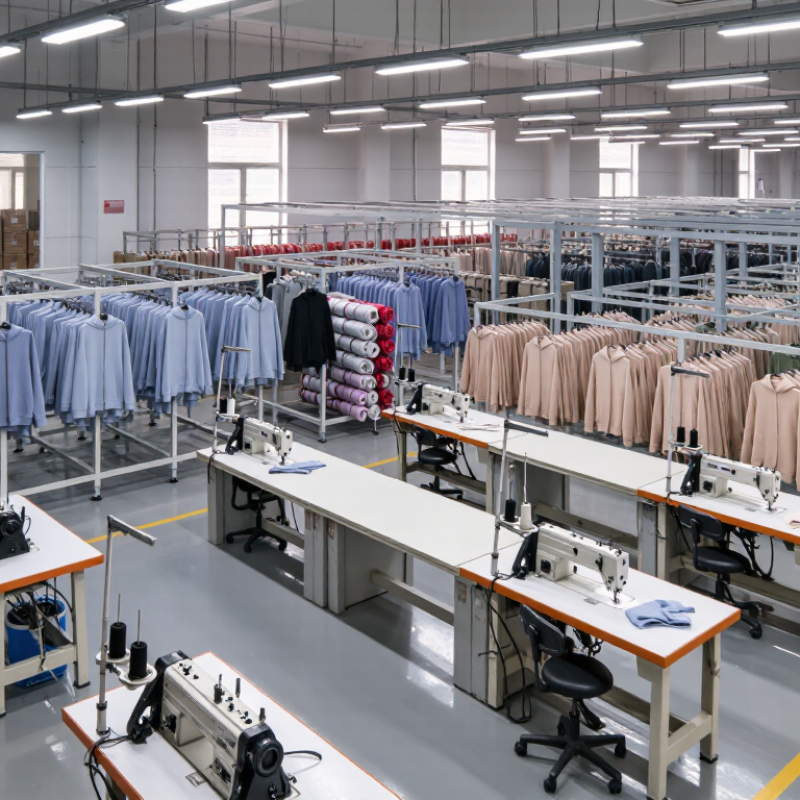
A leading custom hoodie manufacturer offers more than low prices and attractive photos. Practical experience begins with a clear sampling process. The team should confirm fabric weight, fiber content, measurements, stitching, and printing methods before production. Details matter. A reliable supplier also explains realistic minimum order quantities and delivery schedules without making vague promises.
Technical knowledge appears in small decisions. A skilled factory can recommend suitable fleece for different climates and explain how washing may affect shrinkage. It should test colorfastness, seam strength, and print durability before approving bulk production. Buyers should receive measurable specifications, inspection records, and clear samples. Ask for proof. Well-organized communication also reduces mistakes between design files, labels, packaging, and final quantities.
Authority comes from consistent results, not polished presentations. Review production experience, quality procedures, worker training, and export documentation. A responsible manufacturer should discuss ethical sourcing and follow applicable safety and labor requirements. However, no factory gets every decision right. Even experienced teams may miss a measurement or misread a color reference. The important point is how quickly they identify, report, and correct the problem. A useful supplier welcomes pre-production checks and keeps records at each stage. Trust grows through evidence, honest updates, and garments that match the approved sample.
China Top Custom Hoodie Manufacturing Suppliers?
Main Types of Chinese Custom Hoodie Suppliers
Chinese custom hoodie suppliers usually fall into four groups. Factory-direct manufacturers produce garments in their own facilities. They often offer better control over fabric, stitching, printing, and packaging. OEM suppliers follow a buyer’s tech pack and approved sample. ODM suppliers provide existing patterns, then adjust colors, labels, and measurements. Their development speed can be faster.
Trading companies connect buyers with several factories. They may help with translation, product checks, and shipping coordination. However, their pricing can include extra margins. Small-batch workshops suit new labels, limited releases, or testing orders. Their flexibility is useful, but production capacity may change during busy seasons. Ask for recent sample photos and confirm where each process happens.
Tips: Request a detailed quotation, not only a unit price. Check fabric weight, fiber content, rib quality, shrinkage, and size tolerance. A 380 GSM cotton-blend hoodie feels very different from a 280 GSM style. Confirm sample approval before bulk production. Ask how defects are recorded and corrected. Factory audits, material certificates, and pre-shipment inspections improve reliability, but none removes every risk. No supplier is perfect. A rushed sample can hide problems. I would allow extra time for revisions, because early assumptions are often wrong. Keep communication written, with measurements, artwork files, and delivery dates clearly recorded.
Typical minimum order quantities by supplier type. These indicative benchmarks reflect common sourcing practices and can vary by fabric, decoration method, sizing, and production complexity.
Choosing China’s top custom hoodie manufacturing suppliers requires more than comparing online prices. Quality starts with fabric weight, fiber composition, stitching, and color consistency. Request physical samples before placing a bulk order. Check ribbed cuffs, hood seams, print alignment, and shrinkage after washing. A reliable supplier should explain fabric testing, inspection procedures, and acceptable defect rates clearly. Vague answers deserve caution.
Pricing depends on fabric, decoration method, order quantity, packaging, and delivery terms. Ask for an itemized quotation, not only a unit price. Compare identical specifications across several factories. A cheaper hoodie may use thinner fabric or weaker thread. Production capacity also matters. Review monthly output, sewing-line equipment, worker experience, and current order schedules. Ask whether production is handled internally or subcontracted. Factory photos are not enough. Request recent production evidence and a realistic timeline.
Tips: Send a detailed specification sheet with measurements, fabric weight, artwork files, labels, and packaging requirements. Approve a pre-production sample in writing. Confirm inspection points before cutting begins. Keep a small quality reserve in your budget. I have seen attractive samples hide uneven stitching in larger batches, so one approval is never sufficient. Production capacity can look impressive on paper, yet communication delays may disrupt delivery. Test the supplier with a modest order first. That step may cost more initially, but it reveals practical reliability.
Custom hoodie manufacturing in China usually begins with a clear technical pack. It should show measurements, fabric weight, color references, stitching, labels, and artwork placement. Without these details, factories may interpret the design differently.
The supplier then checks fabric availability and production limits. Cotton blends, brushed fleece, and recycled fabrics create different hand feels and shrinkage risks. Samples expose weak planning. A first sample may reveal twisted seams, uneven ribbing, or artwork placed too close to the pocket. These issues should be recorded and corrected before bulk production.
After approval, the factory prepares graded patterns and cuts the selected fabric. Sewing lines assemble the body, sleeves, hood, cuffs, and waist hem. Quality staff inspect measurements, thread tension, color consistency, and print durability during production. A pre-shipment inspection should include random pieces from different cartons, not only the best-looking hoodie.
Lead times depend on order quantity, fabric sourcing, decoration methods, and seasonal capacity. Clear communication about tolerances is essential. A two-centimeter measurement error may change the fit noticeably. Payment terms, packaging details, care labels, and shipping documents also need written confirmation.
The process is rarely perfect. Some buyers approve samples too quickly, then discover production differences later. In my experience, extra fitting rounds often cost less than rushed corrections. A reliable manufacturing partner documents each change and keeps the approved sample available for comparison.
Choosing a custom hoodie supplier requires more than comparing prices.
Review fabric weight, fiber content, stitching, printing methods, and production capacity. A practical supplier should explain these details clearly and provide recent samples. Check the hood shape, ribbed cuffs, seam strength, and color consistency under natural light.
Your order documents must be precise.
Include measurements, tolerance ranges, artwork files, label placement, packaging instructions, and carton markings. Confirm the minimum order quantity, sample timeline, production lead time, payment schedule, and inspection process in writing.
Ask how the supplier handles defective pieces or delayed materials. A low quotation may hide weak quality control. I once treated fast replies as proof of reliability, but communication speed alone proves little.
Tips:
Request a pre-production sample before bulk manufacturing. Compare it with your approved specification sheet. Use staged inspections during cutting, sewing, printing, and packing.
Keep one signed sample for reference. Small details matter, such as drawstring length and folding method. Leave extra time for corrections, especially during busy seasons.
Build a simple order tracker with dates, quantities, approvals, and open issues. Suppliers should report changes before making them, not after cartons are sealed.
It should provide clear samples, measurable specifications, and realistic production schedules. Details matter. The team should confirm fabric weight, fiber content, measurements, stitching, and artwork placement before production.
A technical pack reduces design misunderstandings. It should include measurements, tolerance ranges, fabric details, color references, labels, and packaging instructions. Without these details, different teams may interpret the design differently.
Cotton blends, brushed fleece, and recycled fabrics can shrink differently. The manufacturer should explain their hand feel and climate suitability. Washing tests may reveal unexpected size changes.
The factory should test colorfastness, seam strength, measurements, and print durability. Inspect the approved sample carefully. Check the hood, cuffs, pocket, and waist hem.
A sample may show twisted seams, uneven ribbing, or artwork too close to the pocket. These issues should be recorded and corrected before bulk production. Mistakes happen.
Use staged inspections during cutting, sewing, printing, and packing. Inspect random pieces from different cartons before shipment. Do not check only the best-looking hoodie.
Confirm the minimum order quantity, sample timeline, lead time, payment schedule, and inspection process. Also record packaging, care labels, carton markings, and defect handling. Small omissions can become expensive.
Review recent samples, production experience, quality procedures, worker training, and export documents. Fast replies are not enough. A supplier should report changes before cartons are sealed and keep useful records.
Lead times depend on quantity, fabric availability, decoration methods, and seasonal capacity. Allow extra time for fitting rounds and corrections. Rushed approvals often create avoidable production differences.
China offers a wide range of custom hoodie manufacturing suppliers, from small specialized workshops to large-scale factories with advanced production lines. A leading supplier should demonstrate consistent garment quality, reliable communication, skilled workmanship, flexible customization options, and the ability to meet different order volumes. Buyers should compare fabric choices, printing and embroidery quality, size accuracy, sample standards, pricing transparency, minimum order quantities, and production capacity before making a decision.
The custom hoodie manufacturing process usually includes design confirmation, fabric and color selection, sample development, pattern preparation, decoration, cutting, sewing, quality inspection, and final packaging. To manage orders effectively, buyers should provide clear specifications, approve samples carefully, establish realistic timelines, and confirm payment and shipping terms in writing. Regular production updates and final inspections can help reduce errors, control costs, and ensure that the finished hoodies meet the expected quality and delivery requirements.